Should you pay for kids’ college or save for retirement?
Conventional advice is to prioritize saving for retirement before funding college because shortfalls later in life are hard to make up. However it is best to actually crunch the numbers to find the solution that fits best for your family, rather than relying solely on standard rules of thumb.
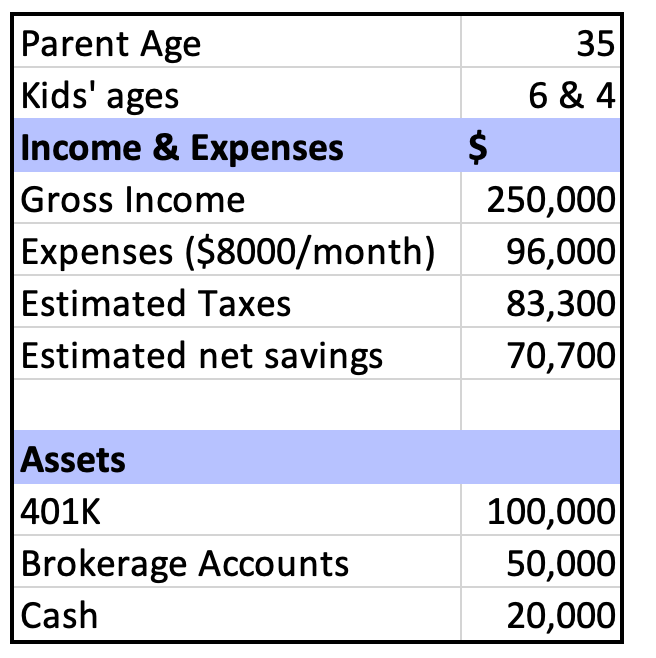
Example: Household with $250,000 in income and kids aged 6 and 4.
- Mid-30s with 2 kids aged 6 and 4.
- Pre-tax annual income is $250,000.
- Monthly expenses are $8000 a month.
- They have saved $100,000 in 401Ks and $50,000 in brokerage accounts.
They have not yet saved anything for kids’ college but feel like they are behind on college savings. Ideally, they want to pay for all of their kids’ college so that the kids graduate with zero debt, which is a worthy goal.
But are they on track for retiring in their mid-60s? And can they also pay for kids’ college?
Results Summary:
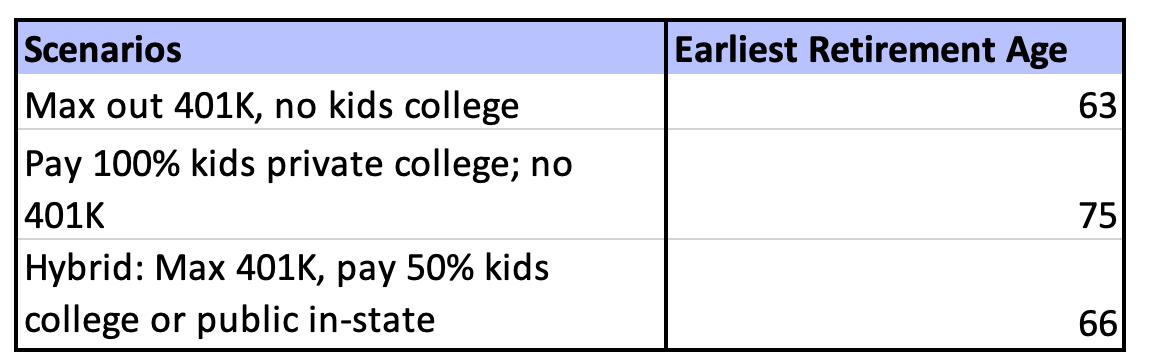
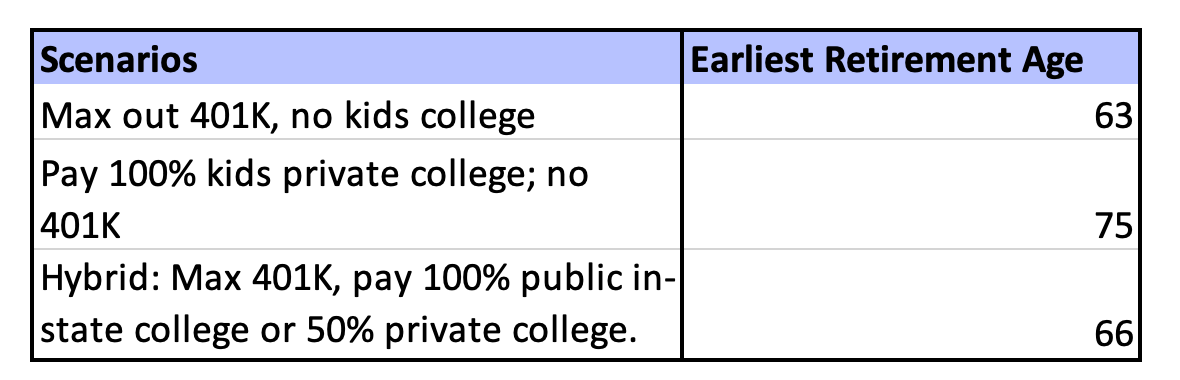
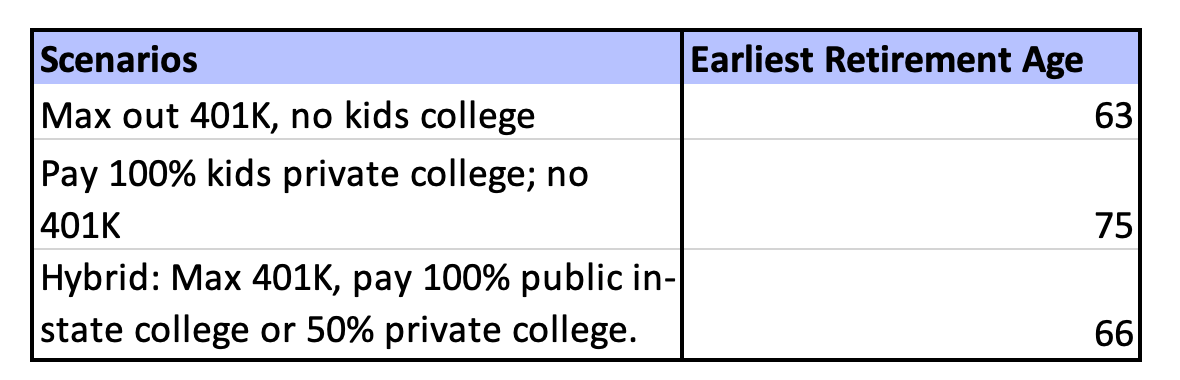
- If they max out their 401K, they will be able to retire by age 63.
- If they instead pay for 100% of kids’ college, and plan for private college, they will retire only at 75.
- A hybrid approach, where they max out their 401K but pay for either 100% of public in-state college or 50% of private college allows them to retire at age 66.
Assumptions
- Rate of returns before retirement is assumed to be 5% and after retirement is 4%. Inflation assumed to be 3%. You can change these numbers on the Planwell webapp to make it more aggressive.
- We also used college expenses data from the College Board and assumed a college fees growth of 4% and return on college savings to be 5%.
Detailed breakdown
While crunching the numbers with Planwell, here is what we see:
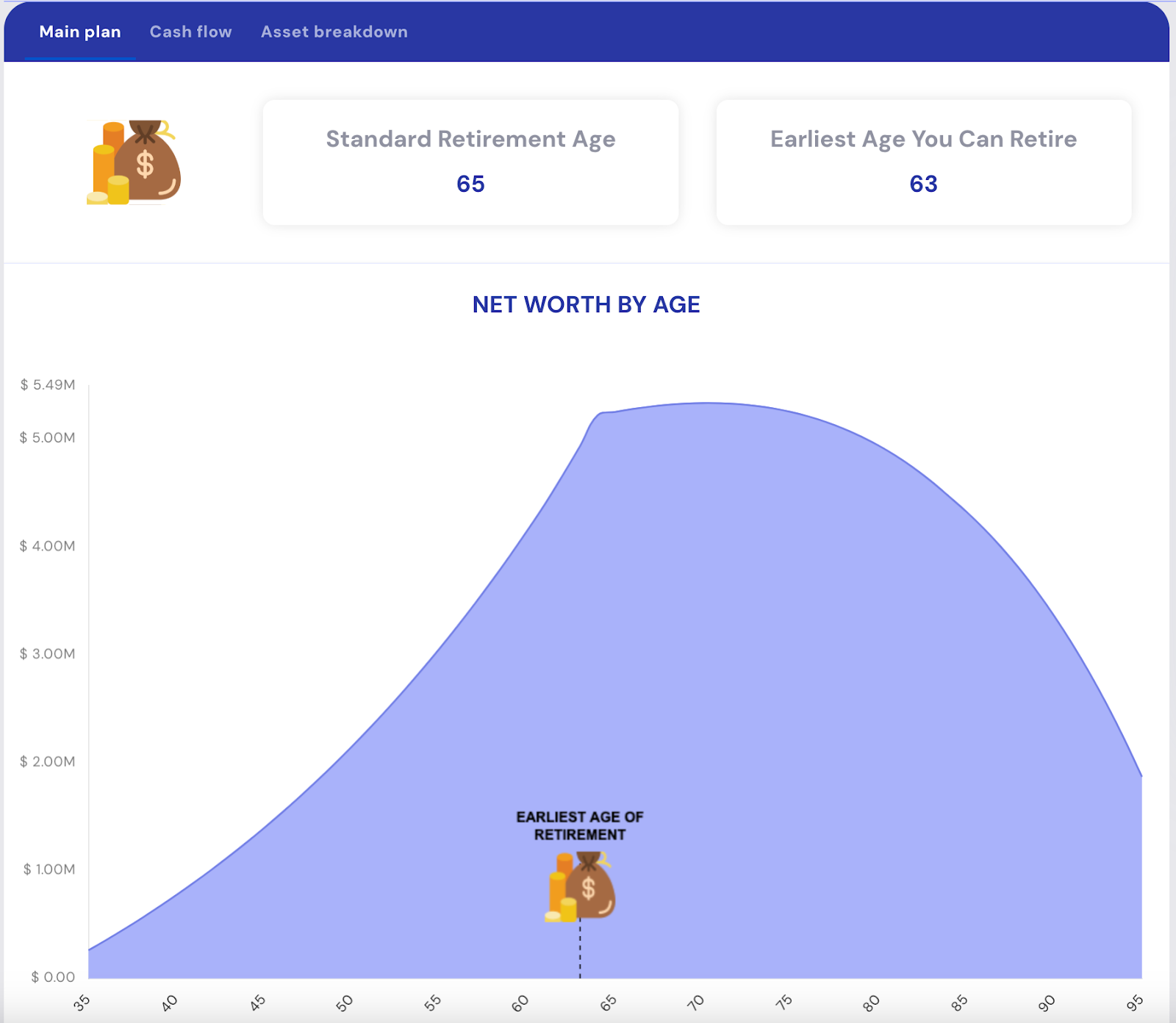
Scenario 1: Max out your 401K to $23,500; Retire at age 63
The user can retire comfortably at age 63.
However, they have not saved anything for kids’ college. So that’s a concern.
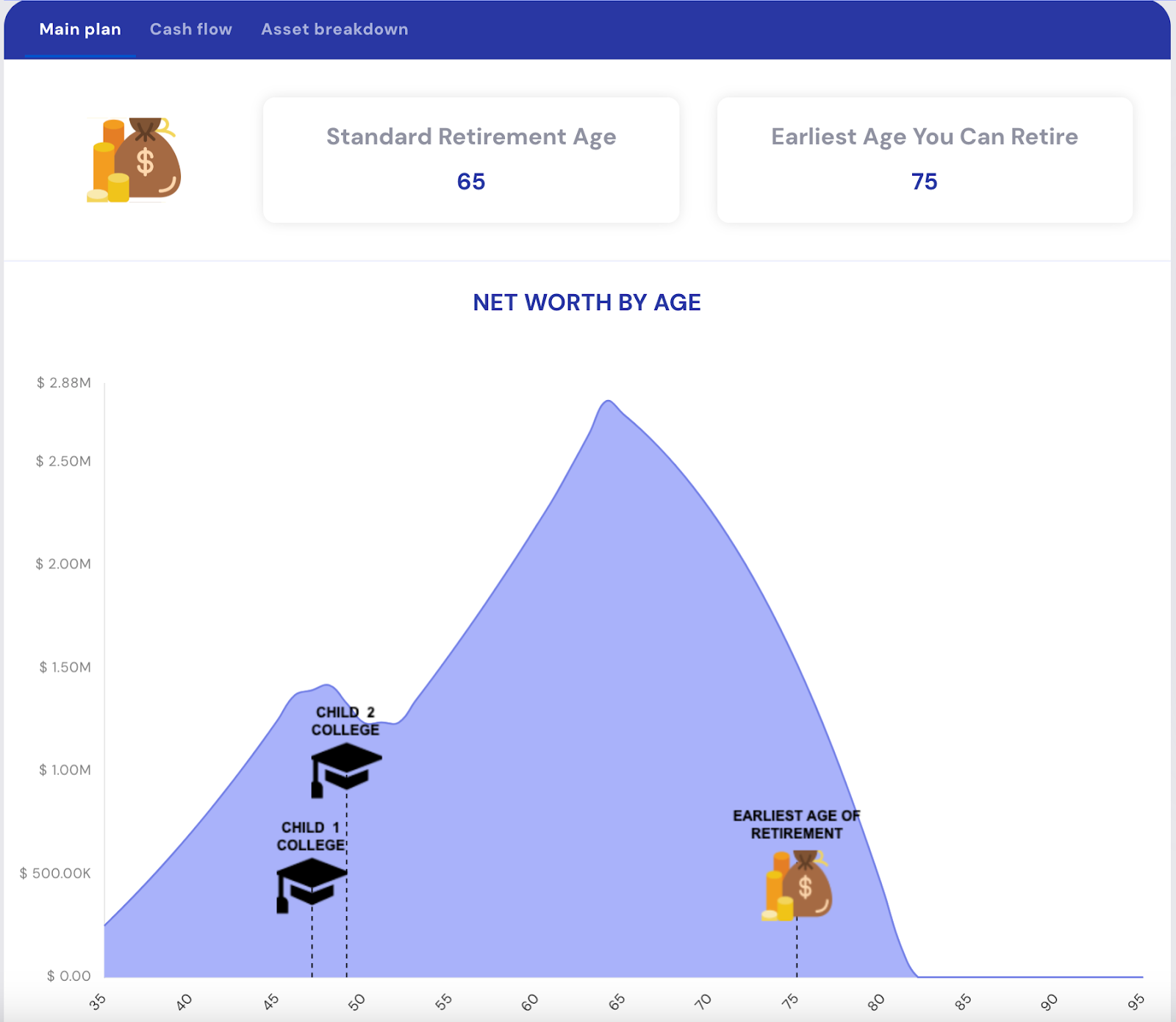
Scenario 2: Pay 100% for kids’ private college expenses; Retire at age 75.
User retirement gets delayed to age 75, which is a significant delay.
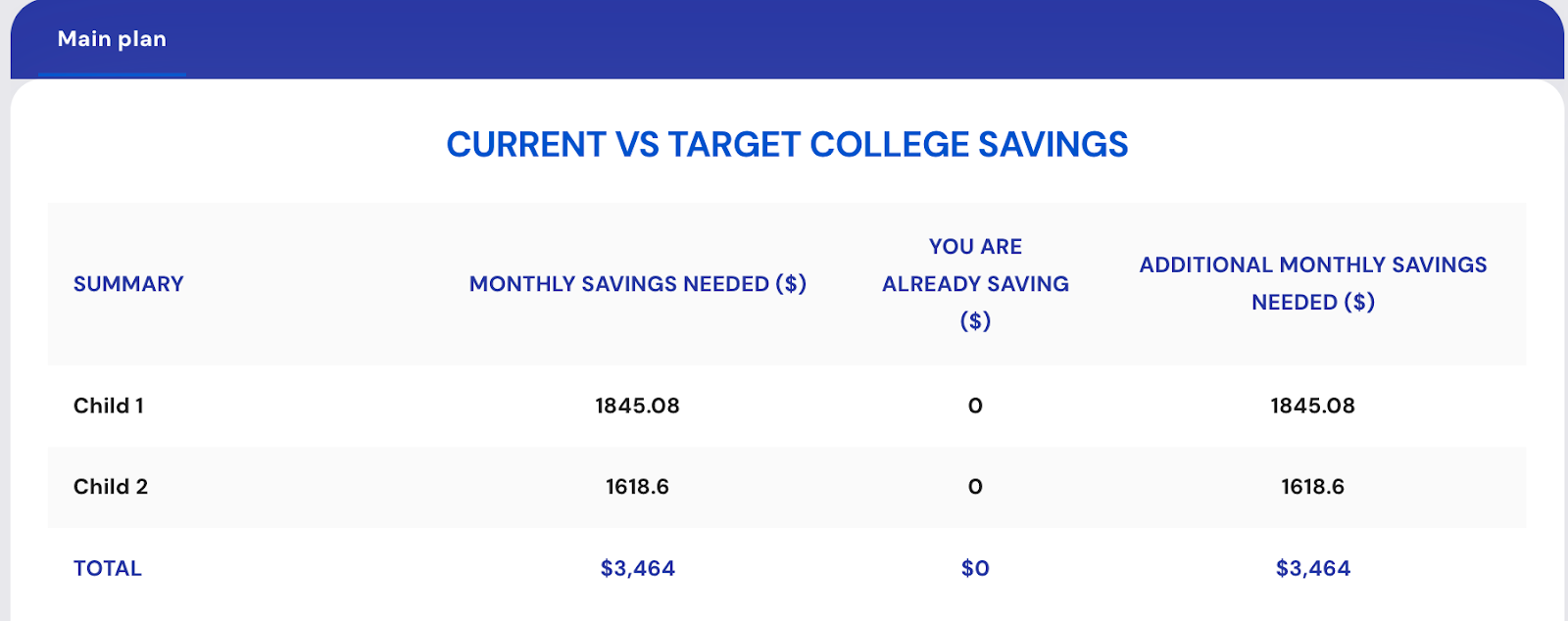
Based on data from the College Board, private college was $244,000 as of 2024. This family would need to put aside $3464 per month until kids turn 18 to pay for full college costs at a private 4-year institution.
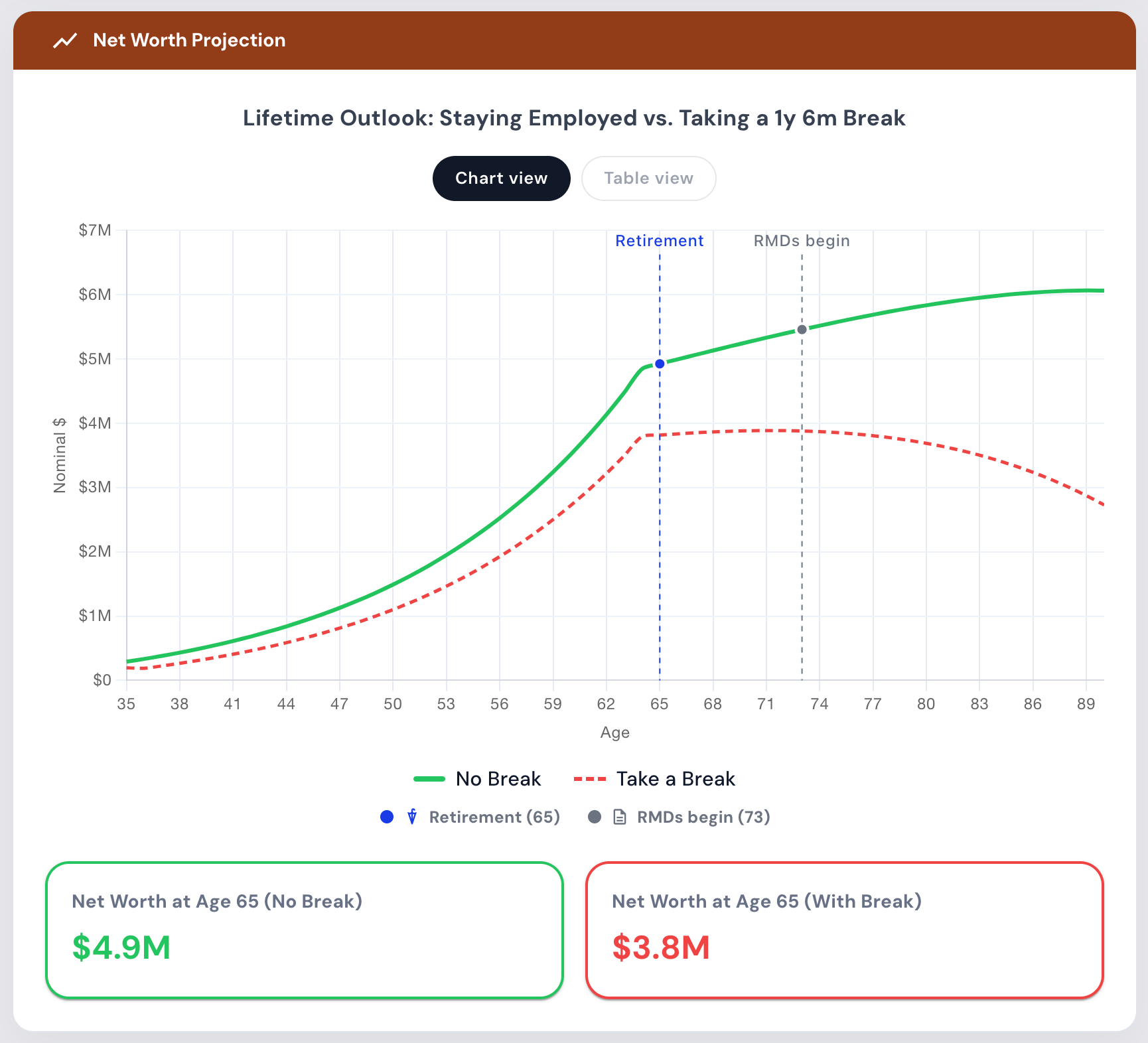
Here is how your net worth projection looks like.
Scenario 3 Hybrid approach: Pay for 50% of private school or 100% of public in-state tuition; Retire at 66
This reduces the college expenses by about half, and allows this person to retire at age 66.
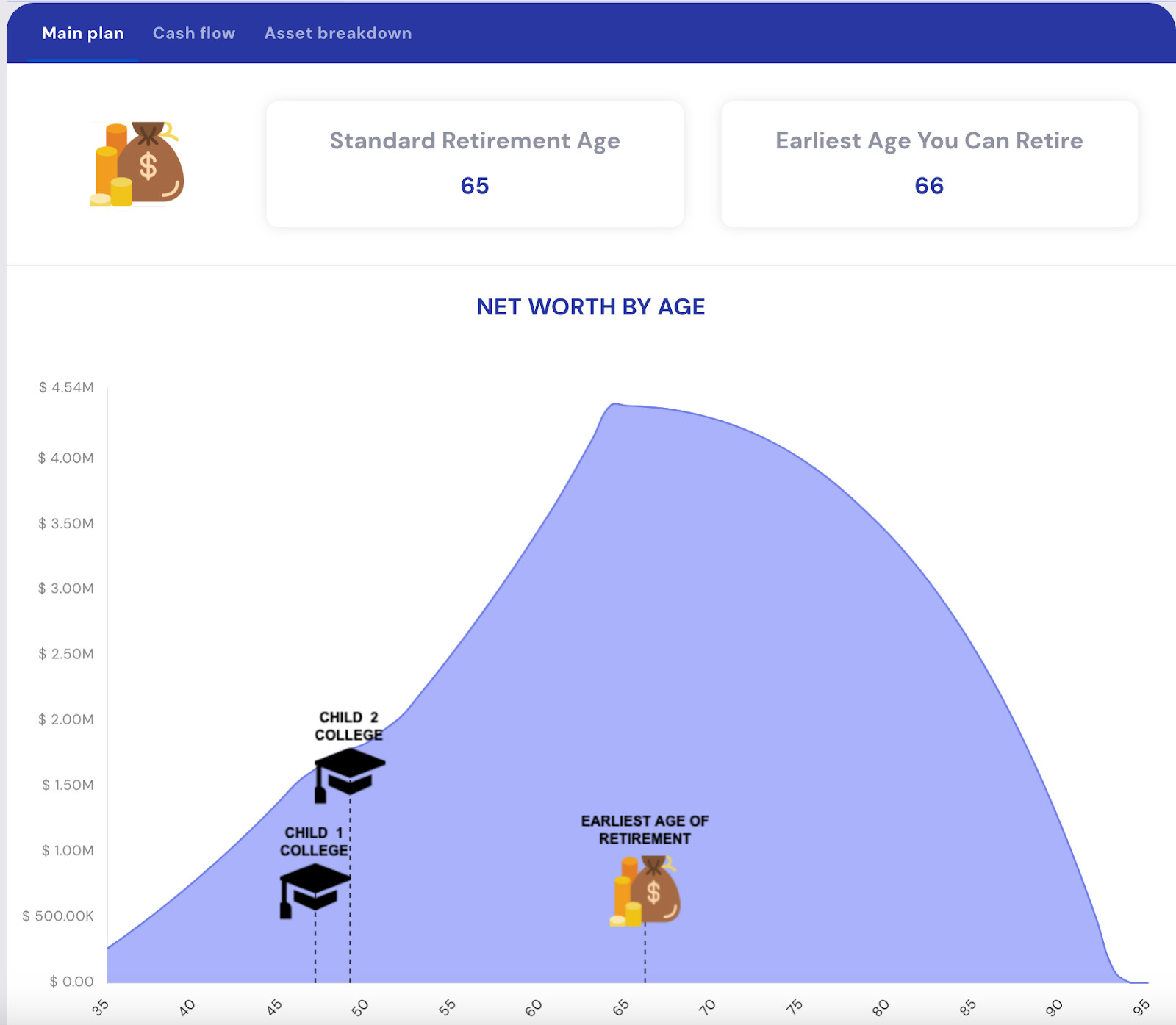
Recommended: The hybrid approach that prioritizes retirement but also help put kids through publoic in-state college without tuition or alternatively, pays for 50% of private college.