Creating Lasting Family Wealth: Your 5-Step Blueprint

Design by Freepik
Generational wealth is family wealth that is passed down from one generation to the next, allowing future generations to enjoy financial security and well being. Building family wealth and leaving a solid legacy requires a lot of financial planning. Here are the 5 steps to build lasting wealth for your family..
Focus on long term asset building, don’t be a HENRY
It is easy to think that earning a high income will automatically translate to a high net worth. But this is often not the case. A lot of high earners are HENRYs (High Earners, not Rich Yet). While they earn a lot, they have a high spending level and do not save or grow their assets. This can get in the way of building or growing wealth for their kids.
Here are some key techniques to build long term wealth:
- Treat income and assets as capital, not as a source of spending. This differentiates the people with a wealth mindset from the high earners who are not able to grow wealth or leave a legacy. When you treat income as capital, you are incentivized to maximize your savings and deploy it towards investments that grow this capital.
- Get the financial basics right. Live within your means and manage debt. Target a high savings rate, avoid credit card debt. Carefully watch the fees on your investments to make sure the expense ratios and investment fees are not eating away the returns.
- Focus on diversification: Understand your risk tolerance, which is a function of (1) your existing assets (2) time horizon (3) risk tolerance. Based on these factors, decide whether you want an aggressive/ moderate/ or conservative allocation. Consider ETFs or funds that automatically provide diversification and rebalance periodically, about 1-2 times a year.
Without disciplined asset accumulation, even six-figure earners can work their entire lives with little to show for it. High income becomes a treadmill rather than a wealth-building engine.
Goals based planning
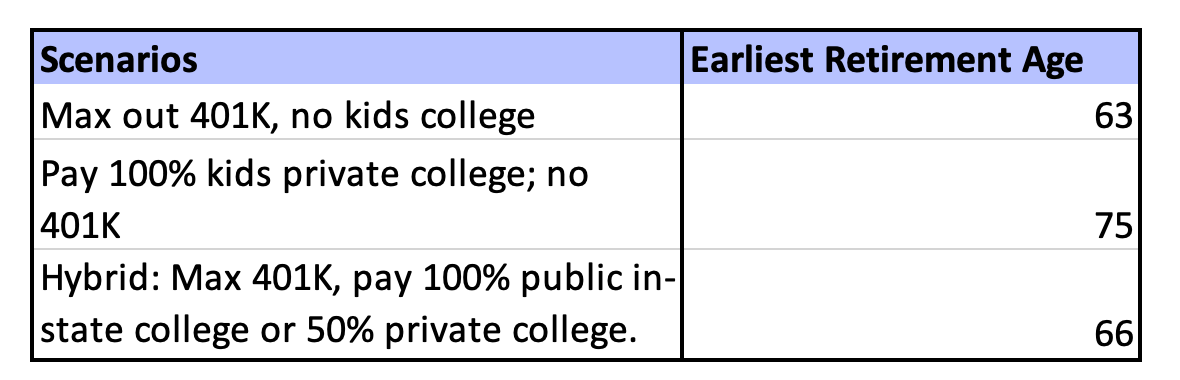
An important pre-requisite to building generational wealth is to set long term and short-term goals for both yourself and family members, including kids, and allocating funds systematically towards each goal. You may have to make tradeoffs between different goals. For example, if you want to save enough money for a legacy or inheritance, cut spending accordingly. Or if you upgrade cars every 3–4 years, you may sacrifice compounding in your 30s and 40s.
Why this matters: A goals-based financial plan ensures that you save enough for each goal and prioritize and make tradeoffs between various goals. You can also plan in a way that you leave a legacy for your heirs.
Make an estate plan
An estate plan is the process of detailing how your wealth should be distributed or managed if you pass away or become incapacitated.
Set up a last will and testament to determine how to distribute assets and nominate guardians for minor children. A will is a document in which you outline who will inherit your assets. It determines who your guardian will be and you can also state who the executor of the will will be.
Set up a revocable living trust. This will avoid the costly probate process for your heirs.
Set up a power of attorney to manage your finances if you are unable to do so.A power of attorney is a legal document that gives your agent to act on your behalf if you are unable to do so.
Healthcare directives: Outline your wishes clearly for medical decisions and end of life care in the event that you are unable to make these decisions.
Assign beneficiaries for life insurance, retirement bank accounts, 401Ks and retirement accounts, interest on life insurance or annuities.
Why this matters: Without an estate plan, your estate may get into a prolonged and expensive probate process. A will filed for probate becomes a public record and anyone can view your assets or creditors or will beneficiaries. The state dictates distribution of your assets through intestacy laws. Moreover, if you have minor children, a court will appoint a guardian for them. .
Pay attention to the tax aspects of estate planning
Federal estate tax applies to the total estate. This includes stocks, real estate and cash. The exemption is $15M starting 2026. The federal tax rate ranges from 18% to 40%,
State taxes: Most states do not have an estate tax. However 12 states and the District of Columbia impose estate taxes, while five states levy inheritance taxes. Maryland imposes both an estate and an inheritance tax.
Individuals can gift up to $19,000 per year without triggering a gift tax.
Why this matters: Planning for taxes as part of estate planning can help reduce taxes during your lifetime and optimize the tax impact on your heirs when they inherit your estate. Tax planning strategies (gifting, trusts, charitable giving, asset location) can reduce income, capital gains, and estate taxes while you’re alive. For heirs, tax planning can minimize estate taxes, manage step-up in basis, and structure inheritances in a more tax-efficient way.
Nurture financial wisdom in your kids
Now that you have accumulated wealth and set up a will and trust and estate planning, you’re all set, right? Not so fast. It is essential that your kids and other family members learn to manage the money responsibly and build on your legacy.
It is important to teach children about the basics of budgeting, debt management and wealth building starting at a young age. If appropriate also involve children in investment decisions s they grow older so that they learn to manage investments and build wealth for the long term. It is also important to foster personal achievement and initiative so that kids do not develop complacency.
Why this matters: It is not unusual to see heirs squander away larger inheritances due to lack of financial discipline. Starting kids early on financial knowledge and making sound financial and investment decisions can ensure that they are ready to take on the responsibility of the estate without missing a beat.
Frequently Asked Questions (FAQs) about estate tax planning
What is the difference between gift tax and estate tax?
Estate tax applies to transfers of assets after death. Gift taxes apply to transfer of assets while living. However gift taxes and estate taxes have the same tax rate and the same lifetime exemption amount.
Are 401K and IRAs that are part of an estate also taxed?
401Ks and IRAs that are part of the estate are also taxed as ordinary income tax when distributed to beneficiaries. Inherited Roth IRAs and Roth 401Ks are tax free if the account was established at least 5 years prior to the inheritance. Spouses can roll over inherited IRAs to their own account to defer inheritance taxes.
What are federal estate tax rates?
In 2026, the exemption for estate taxes is $15M. The following tax rates apply after the exemption limit is reached.
- 0 to 10,000: 18% of taxable amount
- 10,000 to 20,000: $1,800 plus 20% of the amount over $10,000.
- 20,001 to 40,000: $3,800 plus 22% of the amount over $20,000.
- 40,0001 to 60,000: $8,200 plus 24% of the amount over $40,000.
- $60,001 to $80,000.: $13,000 plus 26% of the amount over $60,000.
- $80,001 to $100,000.: $18,200 plus 28% of the amount over $80,000.
- $100,001 to $150,000.: $23,800 plus 30% of the amount over $100,000.
- $150,001 to $250,000.: $38,800 plus 32% of the amount over $150,000.
- $250,001 to $500,000.: $70,800 plus 34% of the amount over $250,000.:
- $500,001 to $750,000.: $155,800 plus 37% of the amount over $500,000.
- $750,001 to $1,000,000.: $248,300 plus 39% of the amount over $750,000.
- $1,000,001 and up.: $345,800 plus 40% of the amount over $1,000,000.
Conclusion
Creating generational family wealth starts with identifying the right financial goals for you and your family and if necessary, making tradeoffs between them. Make an estate plan and set up a last will and testament as well as healthcare directives in the event that you are unable to do so. If you have minor children, nominate a guardian. Keep in mind the tax aspects of estate planning. And last but not the least, ensure that your kids learn the basics of budgeting, debt management and investing and are are in a position to take on the responsibility of managing your estate.